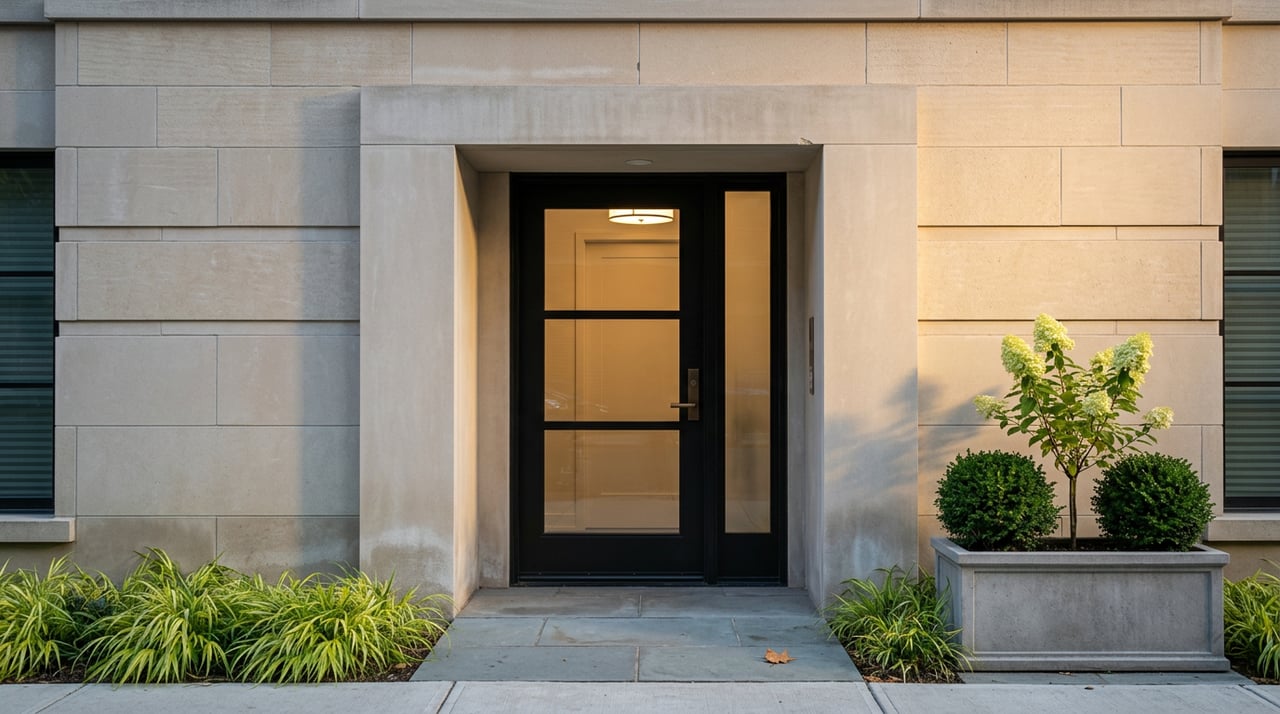
Why New Construction Doesn't Solve Lincoln Park's Assessment Problem
August 13, 2026
August 13, 2026
Ask a Lincoln Park condo shopper this summer why they crossed a vintage walk-up off their list, and the answer usually isn't price per square foot. It's the word assessment. Somewhere between the open house and the ride home, a 1920s courtyard building became a ticking bill, and the newer building three blocks over, with its rooftop deck and radiant-heat baths, became the safer bet.
That instinct makes sense. It's also incomplete. Assessment risk in a century-old courtyard building and assessment risk in a two-year-old elevator building are not the same risk. Buyers price the first correctly and skip the second entirely, mostly because nobody hands them the number until it's already too late to negotiate around it.
In a vintage building, the fear is a special assessment: a one-time bill the board levies when the reserve fund can't cover a roof, an elevator, or a masonry job the building has been putting off. That risk is real, and it's checkable. A reserve study, board minutes, and a look at the age of the major systems will tell you almost everything before you write an offer.
In a new building, the risk isn't a special assessment. It's the monthly HOA assessment itself, and it moves in a predictable direction that the sales materials won't mention. Developers routinely set the first year's monthly dues low enough to make units easy to sell, because a lower number on the listing sheet is a lower number for a buyer's lender to qualify against. Once roughly three-quarters of units have closed, control of the association typically transfers from the developer to an owner-elected board, and that board resets the budget around what the building actually costs to run. Dues commonly jump 20 to 40 percent at that point, not because anything went wrong, but because the original number was never meant to survive contact with real operating costs.
A developer's first-year budget is a marketing document as much as a financial one.
That distinction matters for financing too. Lenders evaluate a condo project's financial stability partly through reserve funding and owner-occupancy data that a brand-new building simply hasn't accumulated yet. Roughly a third of Chicago condo buildings currently carry active FHA approval, a status that tends to firm up only after a project has been through at least one full budget cycle under owner control. A building that closed its first units eight months ago hasn't had time to build that track record, no matter how new the finishes are.
Part of what makes this worth sorting out is that Lincoln Park is, contrary to its reputation as fully built out, in the middle of a real construction moment. Chicago Metropolitan Agency for Planning data puts the neighborhood's median year built at 1970, with only 8.2 percent of housing units built in 2010 or later. That scarcity is exactly why the handful of active new-construction condo projects deserve to be evaluated individually rather than lumped into a category.
The for-sale pipeline right now is small and specific:
Separately, the neighborhood has seen larger apartment proposals move through the city's approval process, including a 28-story, 340-unit tower proposed for 1415 N. Dayton Street from Honore Properties and Peerless Development, designed by bKL Architecture, and a 30-unit building proposed for 754 W. Belden Avenue. Those add real density and reshape the skyline conversation, but they're rental buildings. A buyer comparing vintage ownership against new construction ownership isn't choosing between those and a courtyard building. The actual for-sale comparison set is the boutique buildings above, and it's small enough that each one is worth researching by name, not by category.
| What you're checking | Vintage building (pre-1980) | New construction building |
|---|---|---|
| Assessment history | On file in board minutes | Doesn't exist yet |
| Reserve study | Usually completed | Rare before the first ownership handoff |
| Who set the current dues | An owner-elected board | The developer's sales team |
| FHA approval status | Typically resolved | Often pending |
| Reliability of the posted number | Backed by two-plus years of actual spending | Accurate only until turnover |
The vintage column is uncomfortable but knowable. The new-construction column looks clean because there's less to find, not because there's less risk.
For a building still under developer control, ask directly:
For a vintage building, the parallel questions are more familiar: request board minutes and the reserve study through your attorney during Illinois' standard five-business-day review period, and compare the funded reserve percentage against the age of the roof, elevator, and masonry.
Lincoln Park's headline price data has been inconsistent depending on which platform you check, and that spread is itself a reminder to read the building, not the headline. Redfin's March 2026 snapshot put the median sale price at $700,000, down 5.9 percent year over year, with homes selling in a median of 47 days. Zillow's March 31, 2026 estimate put typical home value closer to $655,778. By April 2026, per-square-foot pricing across both Redfin and Realtor.com landed near $460, well above the roughly $272 citywide figure for Chicago overall.
That premium is being paid for scarcity as much as square footage. When only 8.2 percent of the neighborhood's housing stock postdates 2010, the handful of buildings actually selling as new construction aren't competing against a broad market segment. They're competing against each other, and against buyers' assumptions about what "new" guarantees.
Does buying new construction in Lincoln Park mean I'll never face a special assessment? It usually means you won't inherit deferred maintenance from a prior owner. It doesn't mean the monthly dues are stable. Those numbers are set to sell units first and cover real costs second, and the gap between the two typically closes once the developer hands off control.
How do I check a vintage building's assessment history before making an offer? Request board meeting minutes and the reserve study through your attorney during the review period, and compare the funded reserve percentage against the age of the roof, elevator, and masonry work.
Is there actually new construction to buy in Lincoln Park, or is it mostly rentals? Both are happening. The larger towers moving through city approval, including the proposed building at 1415 N. Dayton, are rental product. The for-sale new construction is smaller in scale, boutique buildings like the one under construction at 2600 N. Clark or the units targeted for delivery earlier this year at Mohawk on the Park, and worth evaluating one building at a time.
Vintage charm and new construction both come with a number attached, and neither number is finished the day you close. If you're weighing a Lincoln Park purchase and want the reserve study read correctly before you write an offer, The BRAND Real Estate Group will walk the building's financials with you, not just the finishes.
Stay up to date on the latest real estate trends.
We pride ourselves in providing personalized solutions that bring our clients closer to their dream properties and enhance their long-term wealth. Contact us today to discuss all your real estate needs!

THE BRAND GROUP
1775 N CLYBOURN AVE #1 CHICAGO IL 60614