The Landmark Line That Decides How Long Your Lincoln Park Renovation Actually Takes
September 10, 2026
September 10, 2026
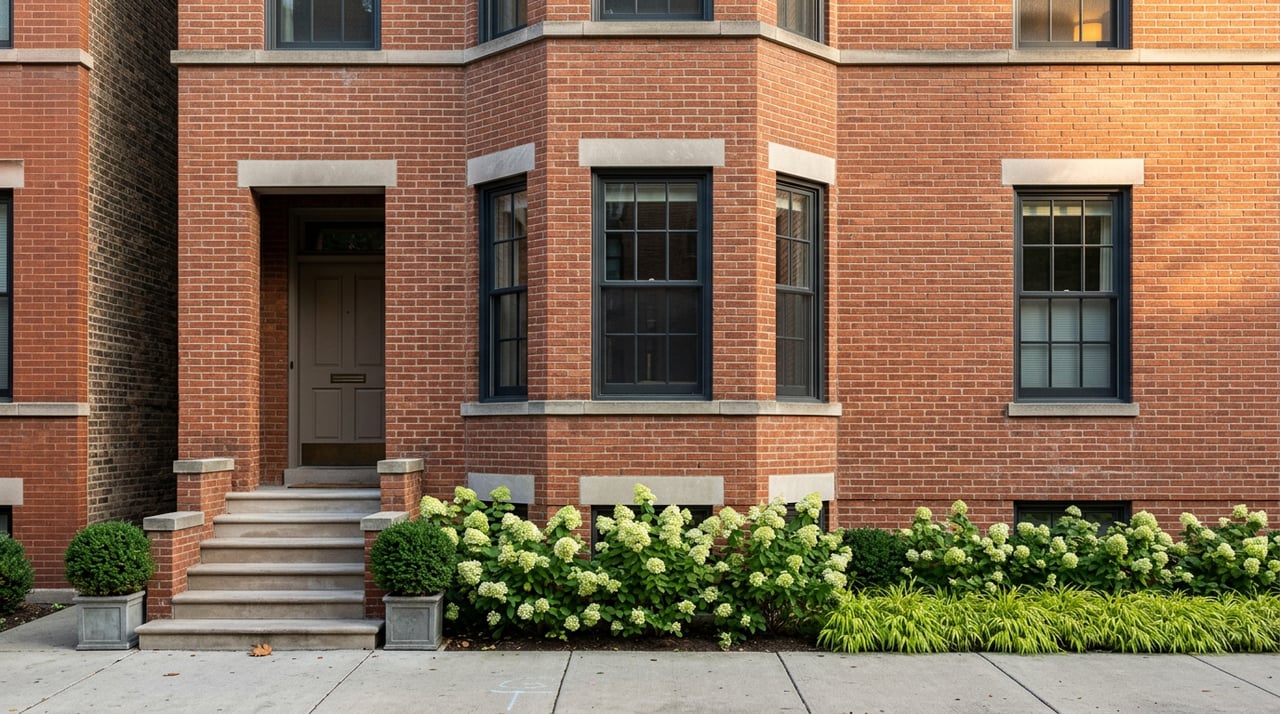
Two greystones a few doors apart on the same Lincoln Park block can be renovating under completely different rulebooks, and the difference has nothing to do with the age of either building or how they look from the sidewalk. It comes down to a boundary that is invisible unless you know to look for it: whether the parcel sits inside one of the neighborhood's four Chicago Landmark Districts. Cross that line and a straightforward exterior repair stops being a simple trip to the Department of Buildings and becomes a filing with the Commission on Chicago Landmarks, with its own case number and its own timeline.
Most buyers find this out after closing, when a contractor asks for a permit and the answer takes longer than expected. Most sellers find it out when a buyer's inspector or architect flags it during due diligence. Either way, it is the kind of detail that belongs in the diligence phase, not the surprise phase, and it is specific enough to Lincoln Park's building stock that a generic renovation guide will not catch it for you.
Lincoln Park's locally designated Chicago Landmark Districts are Mid-North, Sheffield, Arlington-Deming, and Old Town Triangle. Inside these districts, the city classifies every building as either contributing, meaning it was built within the period the district was recognized for and still shows that character, or non-contributing, meaning it is later infill or has been altered enough to lose that status. That classification matters because it determines what level of scrutiny an exterior project gets.
The city's Historic Preservation Division staffs the Commission and reviews every permit application involving a designated landmark or landmark district, checking that proposed work will not damage the historical or architectural features that earned the designation in the first place. Most of what comes through the door is routine enough for staff to sign off on directly. A smaller category, new infill construction, additions, and demolitions that require City Council review, gets kicked up to the full Commission for a public hearing. That distinction is the whole ballgame for a homeowner's timeline: a staff-level review typically clears in a matter of weeks if the application is complete, while a Commission hearing adds real months on top of the standard building permit process that follows.
None of this touches a house three blocks away that happens to sit outside all four district boundaries. That house goes straight to a regular city building permit, no Certificate of Appropriateness, no staff review, no public hearing.
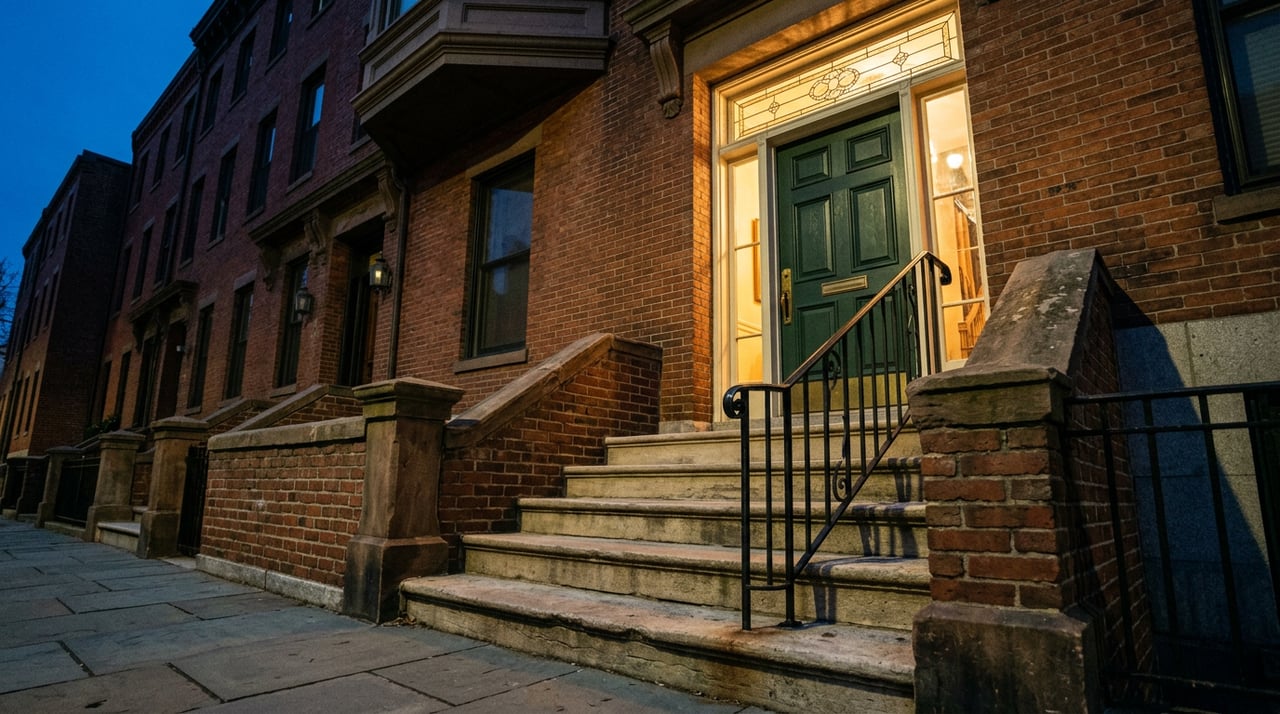
The granularity of what counts as reviewable work is easy to underestimate until you see an actual filing. One property in Mid-North filed a permit in October 2023 for exactly this kind of project: installing new limestone treads and risers over an existing concrete front stair, same size and same location, with the historic handrail and newel posts removed, stored, and reinstalled rather than replaced. Nothing about the finished stair would have changed in footprint or design. It still went through Historic Preservation review before the Department of Buildings would issue a permit for the work.
That is the practical lesson for anyone budgeting a renovation inside one of these four districts. A project that would be a same-day permit application anywhere else in the neighborhood, replacing worn stone with matching stone in the same footprint, becomes a documented exchange with the Historic Preservation Division first. It does not mean the work gets denied. It means the timeline has an extra step that a buyer three blocks away never has to plan around.
A lot of confusion circulates around what a Lincoln Park landmark designation is worth financially, and most of it traces back to mixing up two very different programs. Cook County's Class L incentive reduces the property tax assessment on a landmark building for twelve years, but it is built for commercial, industrial, or income-producing not-for-profit uses. A single-family home you live in does not qualify for it, full stop.
The program that actually applies to an owner-occupied Lincoln Park house is Illinois' Historic Residence Property Tax Assessment Freeze, administered by the Illinois State Historic Preservation Office. If a property is a certified historic structure, sits in a district whose preservation ordinance the state has approved (Chicago's qualifies), and the owner occupies it as a principal residence, a rehabilitation that spends at least 25 percent of the assessor's fair market value within a 24-month window can freeze the assessed value for eight years, followed by a four-year step-up back to market level. There is no income limit and no application fee, and the state strongly advises getting approval before construction starts rather than after, since work done ahead of approval is at the owner's own risk. The freeze also does not travel automatically with a sale. A new owner has to submit their own signed paperwork and move in as their primary residence to keep it running.
For a buyer weighing a gut renovation on a contributing Mid-North or Old Town Triangle property, that 25 percent threshold is worth running the math on early, because it changes whether a big rehab budget comes with a real tax offset or not.
The four district lines are not a permanent map. Landmark Lincoln Park, a community advocacy group focused on the stretch of stately homes along Lincoln Park West and Fullerton Parkway near the zoo, the Conservatory, and North Pond, has been pushing for that corridor to receive Landmark District status of its own, arguing those blocks are historically and architecturally significant enough to warrant the same protection as Mid-North or Old Town Triangle already have. Whether or not that specific push succeeds, it is a reminder that a property sitting just outside today's boundary lines is not guaranteed to sit outside them indefinitely. A house purchased today with total exterior freedom could, a few years from now, need a Certificate of Appropriateness for the same kind of stair repair that already applies to its neighbors two blocks over.
A short diligence checklist makes this manageable rather than mysterious.
Does landmark status apply to interior remodels? Interior work is generally outside Commission review unless it changes what is visible from the exterior or alters structural elements tied to the building's designated features. A kitchen gut in the back of the house is a different conversation than a front porch rebuild.
Can I still replace windows in a landmark district? Yes, but replacements typically need to match the historic profile and material as seen from the street, which is exactly the kind of detail a Certificate of Appropriateness application is built to document.
If I buy a house with an existing tax freeze in place, does it transfer to me? No. The freeze is tied to the owner who applied and completed the rehabilitation. A new owner has to submit their own signed documentation and occupy the home as a primary residence to take over the benefit.
Lincoln Park's vintage housing stock is a large part of what makes the neighborhood worth the premium, and none of this is a reason to avoid a Mid-North greystone or an Old Town Triangle cottage. It is a reason to know, address by address, which rulebook applies before you write the offer, price the listing, or schedule the contractor.
If you are weighing a purchase or a sale of a vintage property in one of these districts, The BRAND Real Estate Group can help you check the boundary, pull the building's designation history, and price the renovation timeline accurately from the start. Request a White-Glove Market Consultation to get the specifics for your address.
Stay up to date on the latest real estate trends.
We pride ourselves in providing personalized solutions that bring our clients closer to their dream properties and enhance their long-term wealth. Contact us today to discuss all your real estate needs!

THE BRAND GROUP
1775 N CLYBOURN AVE #1 CHICAGO IL 60614