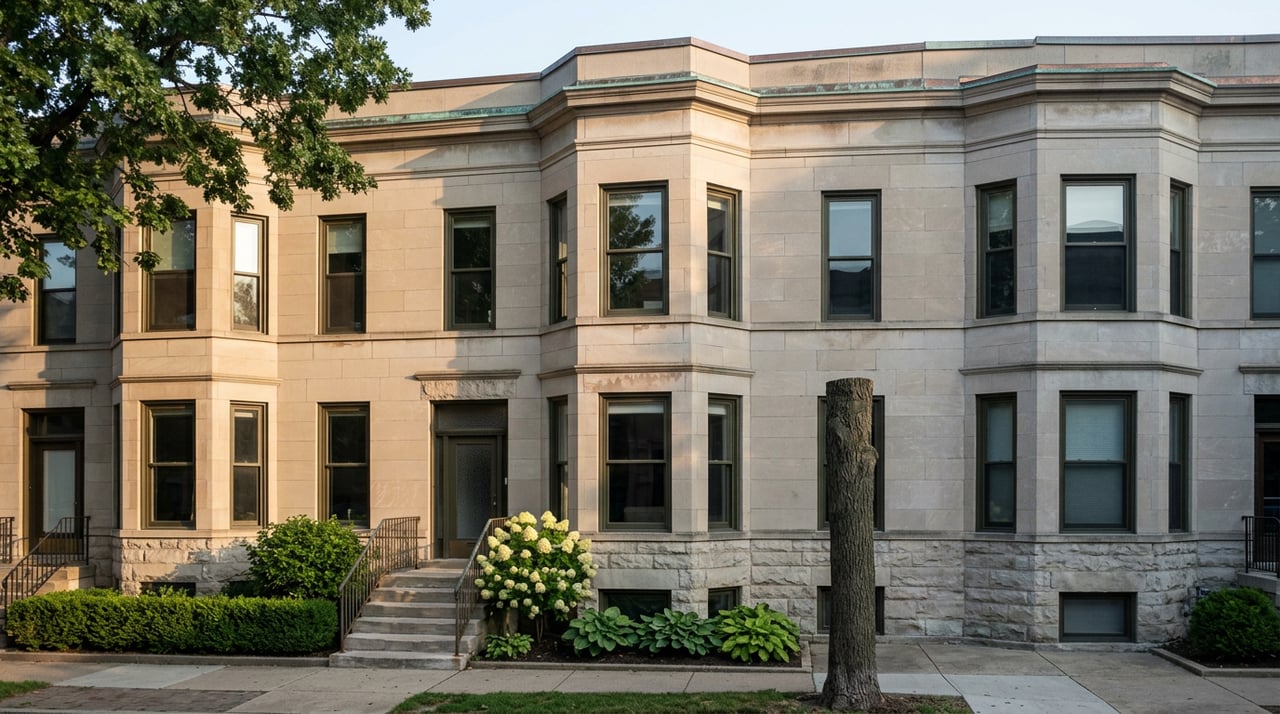
Lincoln Avenue Closed With No Warning. Here's What Actually Happened
September 3, 2026
September 3, 2026
"It's difficult to understand how a major commercial street can be closed for this long with no advance notice." That's Kim Schilf, president and CEO of the Lincoln Park Chamber of Commerce, describing what happened to more than 30 business owners on Lincoln Avenue between Wrightwood and Diversey on the morning of August 10. They came to work and found their street gone.
Not gone forever. The Chicago Department of Water Management is replacing about 2,776 feet of 8-inch water main along that stretch, a project the city expects to finish by mid-October. But the way it happened, and the reason it happened that way, tells you something about this particular block that a simple "construction ahead" post won't.
The closure was approved on August 8 and took effect two days later. Business owners on this stretch, which mixes restaurants, a health boutique, dental and chiropractic offices, and a 7-Eleven, learned about it the same way most residents did: by seeing the street already blocked off. Ald. Timmy Knudsen's 43rd Ward office says it sent a ward-wide newsletter about the closure on August 10, the same day it took effect, after being notified by the Department of Water Management. There was no lead time for anyone to plan around.
For a project of this size, that's unusual. Water main work of this scale typically comes with weeks of posted notice, not two days. Schilf and the chamber have since pushed the city for weekly meetings with the project's resident engineer and for door-to-door outreach so business owners get advance word on what's coming next. Those meetings are happening now. They didn't exist before the closure started.
Here's the part that actually explains the whiplash. This isn't a rushed or poorly planned project on paper. It was included in the city's 2026 capital improvement program, and work began in mid-May. Crews finished an earlier phase of the project in July, ahead of schedule, aided by other construction already underway near Schubert Street. By every account, the work was going well.
Then crews digging along the Wrightwood-to-Diversey stretch hit something the plans didn't account for: an existing underground electric duct sitting exactly where the new water main was supposed to go. That forced engineers to shift the pipe's alignment toward the center of Lincoln Avenue, which in turn required closing the street to through traffic. The city itself has called this an "emergency change" to the scheduled work.
That's the mechanism worth understanding if you live in this pocket of Lincoln Park. A project can run for months without incident and then flip into a full closure in a matter of days, not because anyone dropped the ball on planning, but because nobody can fully map what's buried under a street this old until a crew opens the trench and finds out. The water main going in now replaces one installed in 1889. It's 137 years old. The city says a water main's typical service life runs 80 to 100 years, which means this section had already outlasted its expected lifespan by three or four decades before anyone touched it.
The closure runs through a genuinely mixed commercial block, not just a row of restaurants. Batter & Berries, the popular breakfast spot, is there, along with Juno Sushi, Delilah's, and Pat's Pizza & Ristorante, known for its thin crust. But the stretch also carries:
None of these businesses have closed. What's changed is how customers, patients, and clients reach the front door.
For most of these businesses, the closure is an inconvenience: find street parking a block or two over, walk in. For Pattie Sheehan, owner of Second Act Cancer Recovery Boutique, it's a different kind of problem. Her business helps people recovering from cancer with mastectomy and compression products, and many of her clients are elderly or have mobility limitations. They typically arrive by medical transportation, Pace vans, or family members who drop them at the door. A closed street with no curb access isn't a parking inconvenience for that clientele. It removes the only way some of them get there at all.
When Sheehan raised the issue with city officials, she says the answer amounted to finding parking on the surrounding streets, an answer that doesn't work for someone arriving by wheelchair van with no ability to walk a block from a side street. It's the clearest illustration of why "the street is closed for two months" lands so differently depending on which storefront you're standing in front of.
Since the closure began, the Lincoln Park Chamber of Commerce has secured weekly meetings with the project's resident engineer and managers, along with door-to-door communication about upcoming work and possible accommodations. The chamber has also put up signs around the construction perimeter asking residents and visitors to keep supporting the businesses on the block.
Schilf has been clear that the chamber isn't opposed to the underlying work. The frustration is about the way it was communicated. As she put it, the city's stated priority of supporting small businesses "needs to be reflected in how projects like this are planned and communicated." The city, for its part, hasn't explained why the businesses weren't given more warning once the alignment change was known, only that it was necessary.
The Lincoln Avenue portion of the project is currently on schedule for completion by mid-October, with the street expected to reopen with a concrete base around that time. Additional sidewalk and parkway restoration work may continue beyond that date, so the full return to normal, curb cuts, parkway landscaping, and the rest, could stretch a bit further into fall.
For now, the practical read for anyone who lives nearby: the businesses on this stretch are open and want the traffic. Walking or biking in remains the most reliable way to reach any of them. If you're heading somewhere on this block that depends on curbside drop-off, especially a medical appointment, it's worth calling ahead to ask what the current access setup looks like, since that's exactly the kind of detail that changes week to week as the work progresses.
The bigger takeaway for anyone who calls this stretch of Lincoln Park home is less about this one block and more about what it reveals. A 137-year-old main sitting well past its expected service life isn't unique to this address. It's a reminder of how much of this neighborhood's infrastructure was laid down before cars existed on these streets, and how a routine repair job can turn into a two-month disruption the moment a crew's shovel hits something nobody's records anticipated.
If you're weighing what it's actually like to own property in a neighborhood built on infrastructure this old, or thinking ahead to a move into or out of Lincoln Park, that's exactly the kind of on-the-ground detail The BRAND Real Estate Group tracks block by block. Reach out anytime you want a read on what's really happening in this pocket of the city before you make your next move.
Stay up to date on the latest real estate trends.

We pride ourselves in providing personalized solutions that bring our clients closer to their dream properties and enhance their long-term wealth. Contact us today to discuss all your real estate needs!
THE BRAND GROUP
1775 N CLYBOURN AVE #1 CHICAGO IL 60614